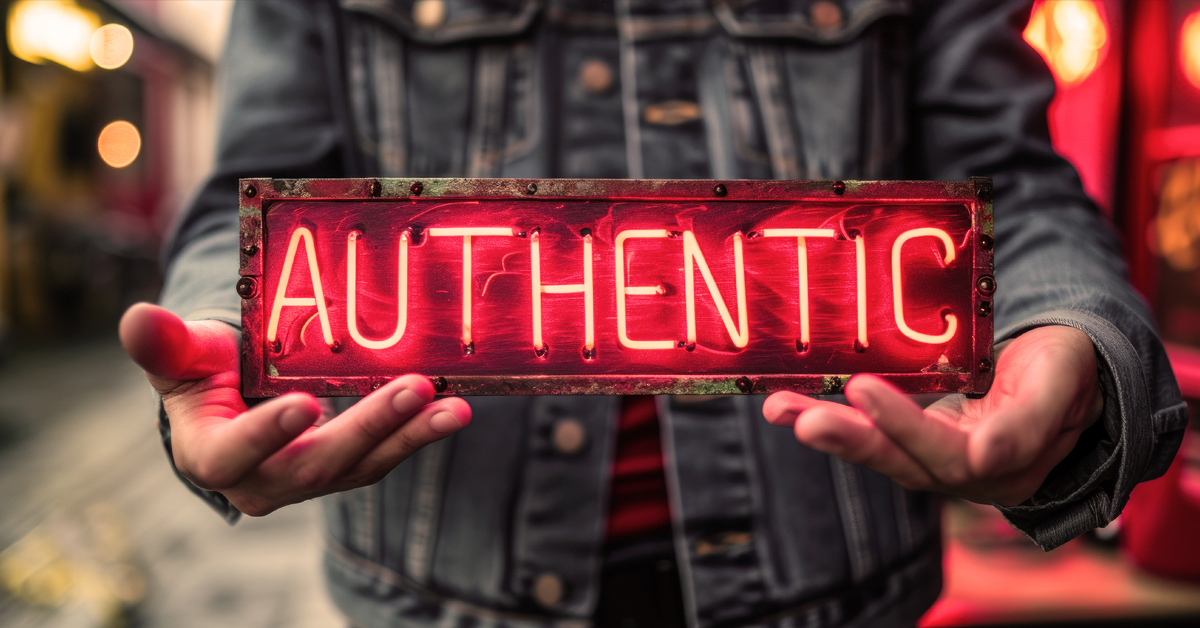
Let’s be honest—we’re all tired.
Tired of the relentless onslaught of perfectly filtered content. Tired of brands screaming at us through algorithms. Tired of feeling like we’re being sold to by robots pretending to be humans. Tired of robots pretending to be other robots pretending to be humans.
The good news? Your customers are tired too. And they’re ready for something real.
The Hype Hangover Is Real
For years, the marketing playbook was simple: automate everything, scale aggressively, and hope something sticks. Chatbots that answered questions with the emotional depth of a vending machine. Auto-generated content that read like it was written by an alien trying to understand human language. Algorithm-optimized posts that somehow managed to be both everywhere and nowhere at once.
We threw it all at the wall. Some things stuck. But something else happened: trust evaporated faster than a puddle in the desert.
Consumers became skeptical. They developed an almost supernatural ability to smell inauthenticity from a mile away—better than a dog detecting a dropped sandwich. The metrics looked good on spreadsheets, but the actual human connection? That was ghosting us harder than a bad Tinder date.
Then came the reset.
“People don’t believe what you tell them. They believe what you show them.”
–– Seth Godin
The Return of the Real
The brands winning right now aren’t the ones with the biggest budgets or the slickest AI. They’re not even the ones with the most followers (shocking, I know). They’re the ones telling actual stories.
They’re sharing:
-
- Why they started (not just what they sell, like we’re supposed to care about their SKU numbers)
- How they struggle (not just their highlight reel of perfect office lunches and award ceremonies)
- Who they are (not just what algorithms think people want to hear at 2 AM on a Tuesday)
- What they genuinely believe in (not just what converts and makes the quarterly numbers look pretty)
This isn’t nostalgia. This is necessity. Also, it’s way cheaper than burning through marketing agencies.
The Return of the Real
The brands winning right now aren’t the ones with the biggest budgets or the slickest AI. They’re not even the ones with the most followers (shocking, I know). They’re the ones telling actual stories.
They’re sharing:
-
- Why they started (not just what they sell, like we’re supposed to care about their SKU numbers)
- How they struggle (not just their highlight reel of perfect office lunches and award ceremonies)
- Who they are (not just what algorithms think people want to hear at 2 AM on a Tuesday)
- What they genuinely believe in (not just what converts and makes the quarterly numbers look pretty)
This isn’t nostalgia. This is necessity. Also, it’s way cheaper than burning through marketing agencies.
Why Authenticity Is the Ultimate Competitive Advantage
- Trust is currency – In an attention economy oversaturated with noise, trust is the only currency that actually matters. You can’t automate trust. You can’t buy it. You can’t even LinkedIn-message your way into it. You have to earn it, the old-fashioned way: by actually being trustworthy.
- Stories stick – People don’t remember marketing messages. They remember stories. Real ones. The kind that make them feel something. Nobody’s ever said, “Remember that banner ad from 2019? Truly life-changing.”
- Loyalty beats virality – A thousand people who genuinely believe in your brand are worth infinitely more than a million who saw your ad once and immediately forgot it existed. Plus, loyal customers don’t require you to go viral every single week like some kind of digital hamster on a wheel.
- Authenticity is defensible – Your competitors can copy your tactics, your technology, even your products. But they can’t copy your story. They can’t copy you. (Unless they’re really, really creepy. In which case, document everything.)
How to Build a Storytelling Strategy That Actually Works
Show the messy middle. Your customers don’t want perfection—they want realness. Share the behind-the-scenes. Talk about the failures that led to breakthroughs. Let people see the humans behind the brand. Spoiler alert: they’re probably just as confused as everyone else. That’s relatable.
Make it personal. Stop writing for “the market.” Write for the actual person reading. Use their language. Address their real problems. Show that you understand them because you’ve been them. Bonus points if you can make them laugh while doing it.
Be consistent, not constant. You don’t need to post every hour. You don’t need to be everywhere. You need to show up consistently with things that actually matter. Quality over quantity, always. Your audience would rather hear from you once a week with something genuine than 47 times a day with recycled content and forced emojis.
Let your values do the talking. What does your brand actually stand for? Not what sounds good in a mission statement that took four committee meetings to approve. What do you do? That’s your story. That’s what people care about.
Invite people in. The best brand stories aren’t monologues—they’re conversations. Ask questions. Listen to responses. Let your community help shape the narrative. Revolutionary concept, I know.
The Bottom Line
The marketing landscape is shifting, and it’s beautiful. The brands that will dominate the next decade aren’t the ones that cracked the algorithm. They’re the ones that cracked authenticity.
Your customers don’t want more automation. They want more you. They want to know why you care. They want to believe that what you’re doing matters. They want to feel like they’re part of something real.
That’s not just good marketing. That’s good business. It’s also probably better for your blood pressure.
So stop trying to game the system. Stop pretending your brand is cooler than it is. Stop using words like “synergy” and “disruption” unless you actually know what they mean. Start telling your real story. Build genuine trust. And watch what happens when people actually believe in what you’re doing.
The hype machine is broken. Long live authentic storytelling.
(And yes, the irony of an article about authenticity being published on the Socko Hub is not lost on us. We’re aware. We’re leaning into it.)